
R2 2025 Review.
A survey of Luther and Calvin towards the doctrine of Christ.
 By Emmanuel, 25 October 2026
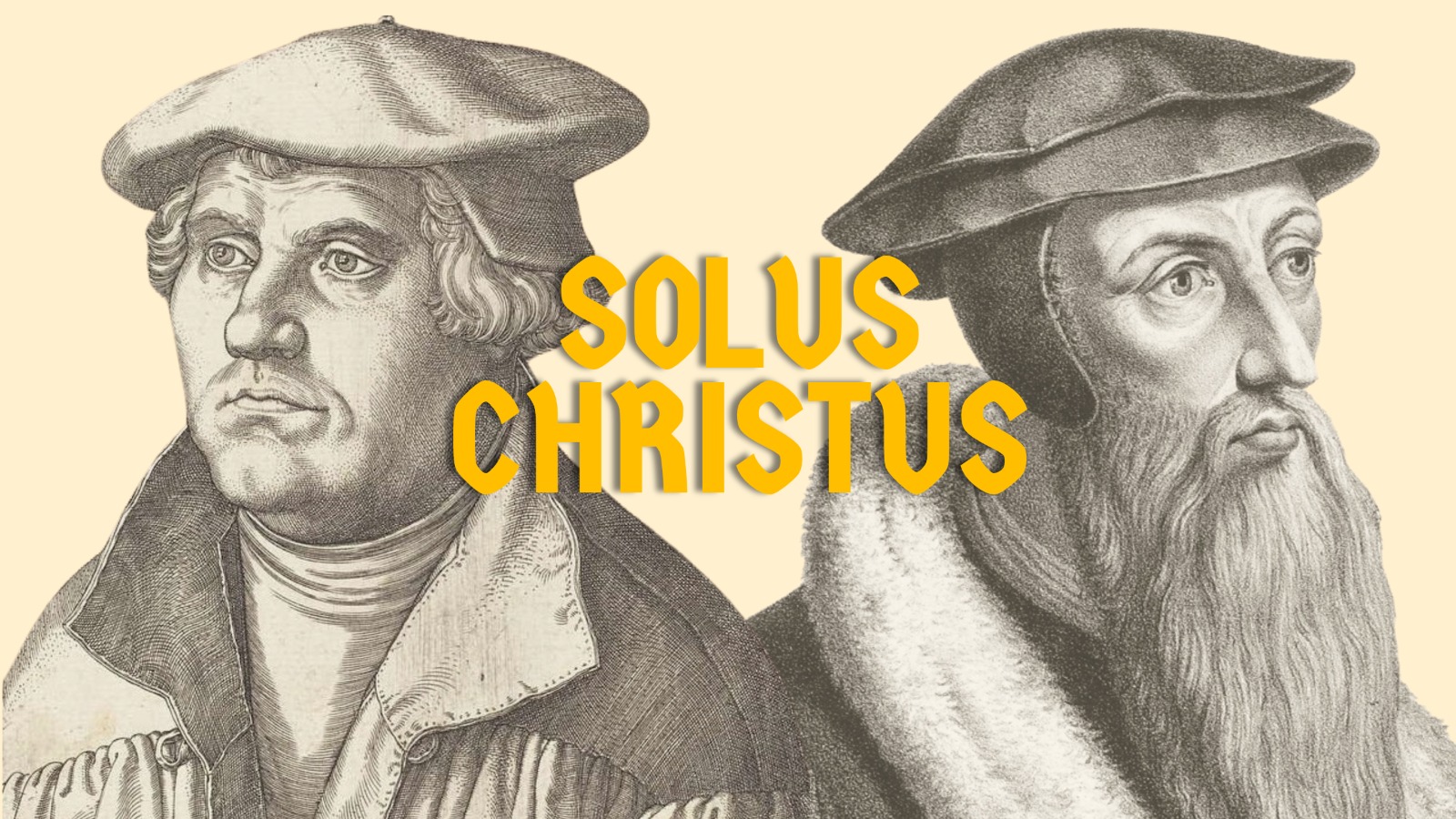
SOLUS CHRISTUS (R2 Conference 2025)
How Luther and Calvin understood “in Christ alone”
No two people (except Jesus) are more synonymous with the Reformation and the Protestant faith than Martin Luther and John Calvin. Both reformers were pivotal to how the Reformation was shaped, and yet, did you know these men were active around 20 years apart? I was intrigued when I heard that from Dr Justin Joon Lee’s R2 lectures last year. The Reformation was a truly massive movement, happening over a long time in many different places, but every reformer would agree on these 5 statements - the 5 Solas. In the last two R2 conferences, we started working through the 5 Solas, and in 2025 the theme of the conference was SOLUS CHRISTUS - in Christ alone.
In this article, we will review what we heard last year about how Luther and Calvin understood the phrase “in Christ alone”. You would imagine that after 20 years of a movement, the understanding of the phrase would be at least a little bit different. I think understanding these differences might help us relate to the gospel better in our lives. Let’s have a look at the lives of these two men and how we are to make sense of it.
MARTIN LUTHER (1483 - 1546)
Luther was born into an upwardly mobile mining family. He decided to study law to attain a better future for himself (a relatable fact for us in Singapore). The trajectory of his life was all set until he found himself in the middle of a violent thunderstorm. Remembering a close friend who had met a similar fate and died, Luther feared for his life. He cried out, “Help me, Saint Anne, and I will become a monk.” Luther cried out to the being he was most familiar with, the one he prayed to for all his life – the patron saint of mining. God spared him, and he kept his promise.
Luther dropped out of university and joined the nearby monastery – St. Augustine’s Monastery. St. Augustine’s was famously strict, but Luther took his monastic life up another level. Luther devoted himself to every practice, fasting, praying and, at one time, even a 6-hour confession.
Luther wrote, “I was a good monk, and I kept the rule of my order so strictly that I may say that if ever a monk got to heaven by his monkery, it was I. All my brothers in the monastery who knew me will bear me out. If I had kept on any longer, I would have killed myself with vigils, prayers, reading, and other work.”
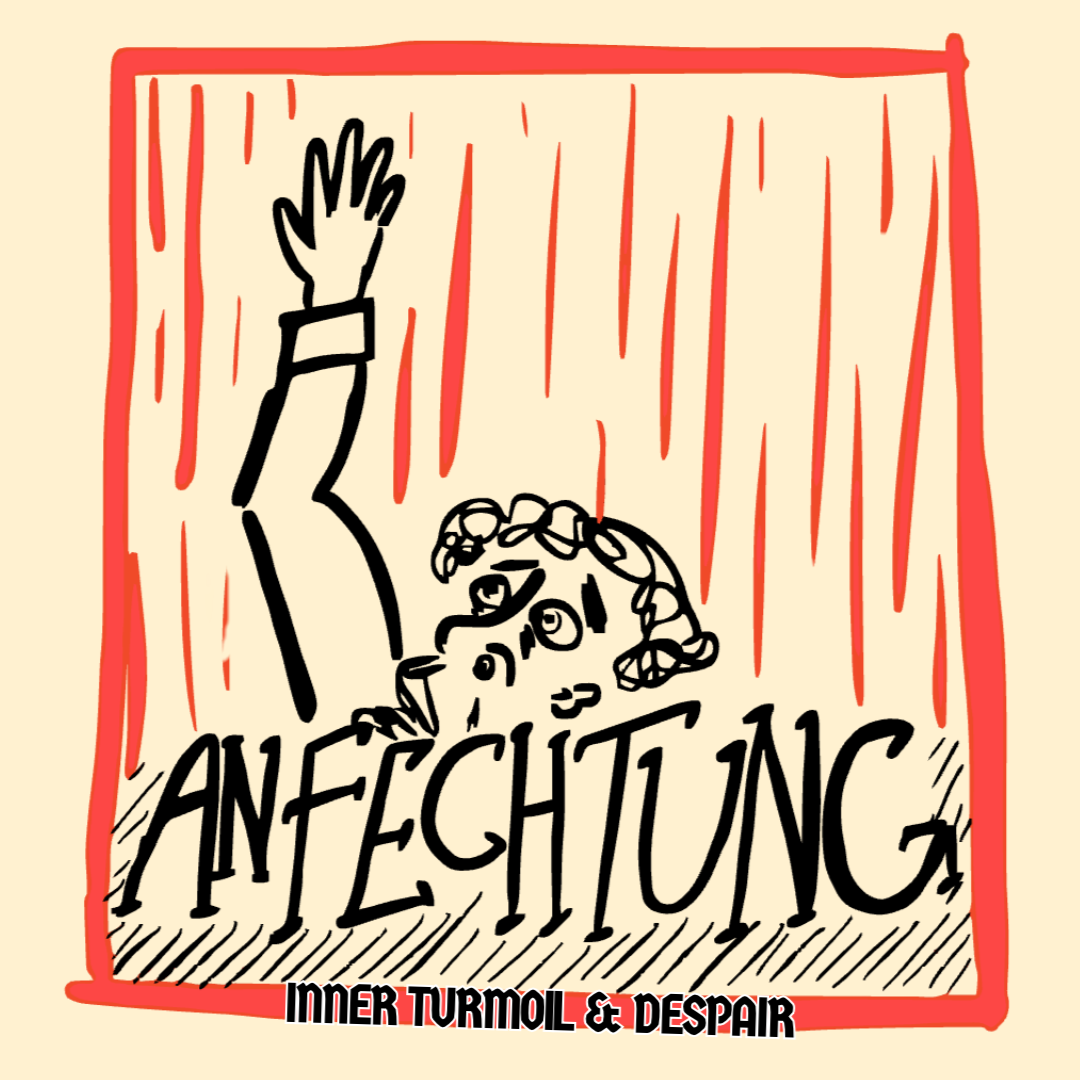
Even with all his devotion and time, Luther could not rid himself of his troubled conscience. He described it as Anfechtung, a deep inner despair, from his inability to attain God’s goodness. He was constantly in turmoil over how good he had to be in order to reach God. The dominant view of grace in the church at that time was a nominalist view which saw grace as additional to what we already do. It is the idea that God will not deny grace to those who do what is in them. But Luther found that to be burdensome. How are we to tell how much doing is enough? What are we to make of the times we make mistakes in our worship?
Luther was urged by his Vicar to enrol in university and obtain his doctorate of theology. There he studied Paul’s writings and came to an important discovery. He found that the righteousness Paul talked about was not one to be feared but one that has been attained by God for us. A key word for Luther is ‘righteousness’, especially from Romans 1:17.
“For in it God’s righteousness is revealed from faith to faith, just as it is written: The righteous will live by faith.”
The word translated as righteous is the Greek word “dikaiosune”, which means to declare someone righteous. For the Latin church fathers reading Latin translations, it is translated as “justificare”, which means to make righteous. Where one reads it as someone who is given a righteous state, the other reads it as someone who is made into a righteous being. The emphasis changes from the state of righteousness to the act of becoming made righteous. Along with the view of grace at that time, Christians were burdened with the need to work towards righteousness. Luther was set free by the words of Paul.
Luther wrote, “Paul was for me truly the gate to paradise”
Back in the wider Catholic faith, Saint Peter’s Basilica, a large ambitious building project, remained unfinished mainly due to the church’s lack of funds. To raise more funds, Pope Leo X introduced special jubilee indulgences for the Germans. Indulgences are a way in which Catholics can pay off some punishment for their sins accumulated in this life. With the special indulgences, German Catholics could give money to the building of the Basilica as an indulgence. This did not sit right with Luther, who was currently teaching at the university.
According to Luther, salvation should be by faith alone and not attained by any amount of work. Luther sought to debate the issue of indulgences within the school, and so he nailed his 95 theses onto the door of the university church. He did not mean it to be more than a topic of debate; however, it grew to be more than that. The theses were translated into German, mass-printed, and distributed around the region, beginning a reformation movement in 1517. In 1521, Luther was excommunicated from the church.
With this context in mind, Luther understood “in Christ Alone” as a complete salvation by the work of Christ. To Luther, we are unable to obtain any part of salvation by our own merit; it is only by grace through faith. Any attempt to find righteousness within ourselves is a burden too heavy to bear. We simply cannot be perfect enough for God. Hence, salvation is found in Christ alone.
JOHN CALVIN (1509 - 1564)
John Calvin was born in France to a middle-class family. His father was a businessman and an apostolic secretary to the bishop of Noyon. Before his death, Calvin’s father was excommunicated on suspicion of heresy, which led to complications in his funeral rites. Hurt by the church, Calvin stayed away from religion until he entered university. There, Calvin encountered humanism and Luther’s writings, which led to his conversion to the Protestant faith. At that same time, the king of France started persecuting Protestants which led Calvin and other French Protestants (Huguenots) to flee to friendlier countries like Germany. Calvin fled to Basel in Switzerland.
In Basel, Calvin wrote the first edition of “The Institutes of the Christian Religion”, a pivotal book for the Reformation, outlining the basics of the faith. Due to the war, Calvin’s plans to move to Strasbourg were disrupted, and he ended up at Geneva where he met William Farel. Though Calvin initially planned to stay in Geneva for a few days, Farel implored Calvin to stay and serve the church there. In Geneva, Calvin put in place many systems as foundations for the church’s practice (e.g. excommunication, liturgy, etc.). Calvin was strong on his views and insisted the church fully subscribed to his confession of faith.
Along with the friction with the Geneva council, Calvin was eventually kicked out of the church for his strict insistence on his practices. He then spent a few years in Strasbourg. In Strasbourg, he was urged to write another edition of The Institutes, and so he wrote a second edition with 11 more chapters and in a different format. He also got married there but was called back to Geneva in 1541. He continued to set up more institutional practices for the church in Geneva (e.g. marriage, system of education, etc.). Though Calvin was criticised for having too much control over his church members, his church still flourished. Calvin later wrote another 3 more editions of The Institutes and was named the “theological architect of the Reformation”.
How then did Calvin understand “in Christ alone”? It comes down to the word “justification” – being made right with Christ. Because Calvin was active 20 years after Luther, he had a more ‘expanded’ view of justification. For the reformers, justification was not salvation but a small part of salvation. Salvation must, more importantly, require the act of “imputation”, having another’s status before God replaced with ours.
Calvin writes in book 3 of “The Institutes of the Christian Religion”, “First, we must understand that as long as Christ remains outside of us, and we are separate from him, all that he has suffered and done for the salvation of the human race remains useless and of no value for us… all that he possesses is nothing to us until we grow into one body with him.”
Through justification, we are able to obtain union with Christ. Our status as sinful and deserving of punishment is now replaced with Christ’s status of righteousness and deserving of God’s riches. Salvation gives us a newness of life that is only obtained in Christ alone. The full picture of salvation is the newness of life (imputation) and the forgiveness of sin (justification). So, to Calvin, “in Christ alone” is not just the means to justification but the act of being in complete union with Christ alone. This also means that we are no longer living our old lives and are fully participating in Christ’s.
OURSELVES (2026 and beyond)
We do not live in the 1500s nor are we living amidst a massive global reformation movement, yet the phrase “in Christ alone” is just as valid to us as it was 500 years ago. What is salvation like to you? Understanding the reality of salvation is different from living out that reality. You might know for a fact that salvation is not attained by our works but by Christ alone, yet you might live as though your life depended on people’s impression of you. Are we more motivated by our appearances than by the amazingly complete work of Christ?
On the other hand, we might understand that salvation now imputes to us the righteousness of Christ, but we might live as though we have no part in the life and mission of Christ. Do our actions and choices reflect this union with Christ? Do people see Christ in us?
“It is from him that you are in Christ Jesus, who became wisdom from God for us—our righteousness, sanctification, and redemption— in order that, as it is written: Let the one who boasts, boast in the Lord.” (1 Corinthians 1:30-31)
As we reflect on the phrase “in Christ alone”, and as we come to understand the fullness of the salvation we received through Christ, I hope that this truth seeps deep into your life. May this profound reality truly change the way we view our walks with God. The same truth that gave freedom to Luther and the same truth that formed the complete basis of Calvin’s defence is the truth we need for our lives today. The world is fickle and unforgiving, but God’s mercy and grace are more than our sins and our imperfect pursuits of righteousness.
Are you living for Christ alone?