
SOLA SCRIPTURA
Archaeology and our Bible reading.
 By Emmanuel, 30 October 2026
SOLA SCRIPTURA
By (the historical) Scripture Alone
Archaeology and our Bible reading.
Archaeology is the study of the ancient and recent human past through material remains. Archaeologists sift through different sources, like structures, artefacts and images to form a picture of what life was like at a particular era. Archaeology is important to us as Christians living our faith by scripture alone. But how can that be? How can studying the remains of a society so far away in time and space allow us to read the Bible better? That is what Dr David Chapman, professor of Archaeology at Covenant Theological Seminary, looked at during the R2 2024 conference as part of the theme Sola Scriptura. We will unpack what he says and understand how this applies to us in this article.
The phrase “By Scripture Alone”, implies the total sanctity and sufficiency of the text we base our faith on. It implies that the reformed Christian takes the scriptures seriously and treasures its very words. In other words, we should be interested in the Bible. Archaeology has something to say about the Bible, and so, we must know what it has to say.
WHAT WE NEED TO KNOW
There were two reasons Dr Chapman gave for why archaeology is important: to illuminate better the context in which the Bible is written, and to confirm historical claims of the Bible. The latter rarely happens in archaeology, the former is more common.
When I moved to Australia from Singapore, I realised that plain bread can be quite a confusing subject. A 3x3 row of bread in Australia is called a dinner roll, but Singaporeans do not have a particular word for it. I think we just call it bread. We call many things “bread” here, but in Australia there is a whole naming system for them (rolls, buns, loaves, etc.). I reasoned that it was probably because we do not eat bread here as much as in western cultures. If such a simple thing as plain bread can vary from context to context, imagine a biblical parable told so long ago and so far away.
Scripture was summarised by Dr Chapman as “God’s revelation of his redemptive actions in history to instruct us in his gracious salvation and our right response”. God chose to reveal his instruction through redemptive actions, especially in history. If we want to better appreciate His words, we must better understand the historical contexts it was written in that is being revealed by archaeologists. If we want to know what they meant by a “bread”, we need to understand the life they led when they said it.
WHAT ARCHAEOLOGY HAS TO SAY
The main means by which archaeologists piece together history is through material remains. Material remains can come in many forms: buildings and monumental structures, images, inscriptions, written remains, human and animal remains and more. These all provide snippets of what life might be like at that time. Here are some examples of different types of material remains and how they shed light on biblical context.
a. Temple of Divine Julius and Roma
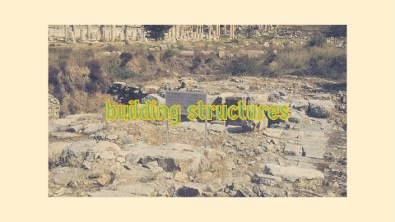
Above is a temple to Dea Roma and Divus Julius Caesar. This is what most ancient monument and building structures look like, with only the base of the structure showing today. These remains show the importance of emperor cult worship in Ephesus during the early church times. It shows us the difficult conditions with which the church in the New Testament operated under.
b. Coins
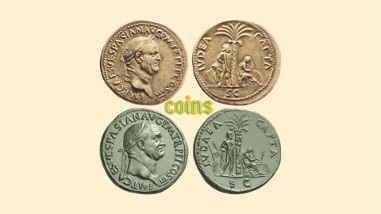
Above is a commemorative coin during the reign of Emperor Vespasian. On one side of the coin shows a victorious roman soldier over a defeated woman and above writes, “Judea Captured” in latin. Coins were basically stamps of approval for the weight of metals for currency and are often used as powerful propaganda tools for Roman Emperors. This coin gives us context as to how the Romans viewed the Jews especially during the early church times.
c. Moabite Stone
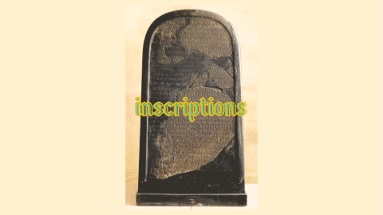
The moabite stone is a form of inscription recording the time of King Mesha that mentioned King Ahab and King Omri from Israel and how they decided to push back against giving goods to Israel. This is consistent with 2 Kings 4 where King Mesha was recorded rebelling against Israel. This material remains shows a text from another civilisation corroborating with the Bible and so confirming its historical claims.
d. Human Remains at Fenstanton
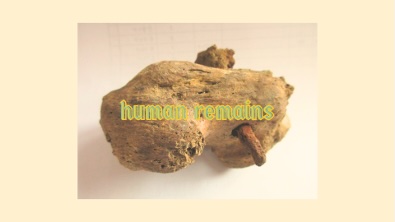
This is a human heel bone found in a mass grave of the Roman Empire. A nail is left pierced through the bone. This proves to us that crucifixion was a form of execution used during Jesus’ time. In this case it confirms the historical accuracy of the gospel accounts.
These are just four different types of examples. As you can see, archaeology has a lot to say about the Bible. Appreciating archaeology can lead to us understanding and appreciating the stories told in the Bible. If you want to know more about the specifics of archaeology Dr Chapman goes into greater detail here in his R2 2024 talk.
ARCHAEOLOGY AND US
Knowing more about the context of biblical life is not an essential part of being a Christian. But knowing more about the Bible enriches our Christian walks, it shows us the rich context behind every word and story and allows us to appreciate the Bible more and defend it better. Like the Psalmist says:
How sweet are your words to my taste, sweeter than honey to my mouth! Through your precepts I get understanding; therefore I hate every false way. (Psalm 119:103-104)
Scripture speaks to every facet of life, it is a lamp unto our feet – our guide. Dr Chapman puts it, that as Christians we must be good historians and ask good questions on the Bible. If this word is our lamp, we should be adept at examining it. The risk we take if we fail to, is that it might cause others to turn away from the faith. As we live By Scripture Alone, let us be more concerned about the Scripture with which we live by.